Introduction
The OTT ecosystem in India has evolved into a highly competitive and value-driven space by 2026. Platforms no longer compete only on content but on pricing, user experience, and ecosystem integration. With options ranging from premium ad-free platforms to ad-supported mass-market apps, choosing the right service depends on individual viewing habits, budget, and expectations.
This comparison breaks down five major platforms—Netflix, Amazon Prime Video, Disney+ Hotstar, Zee5, and SonyLIV—across pricing, content, user experience, and overall value.
Picking an OTT service in 2025? It’s less about who stars, more about how you watch. For many, steady internet matters way beyond big names on screen. Take someone out near Mysuru – they may pass on that sharp-looking Netflix show since daily data runs out fast. That reality steers what apps focus on – tiny file sizes, save-to-watch-later tools, sound quality tuned for local voices.
Top spot worldwide goes to Netflix for sheer number of titles, yet regional language coverage stays thin. Less than one-tenth of its India-focused shows arrive with subtitles in southern tongues right away. Prime Video moves faster here – Kannada and Odia captions appear sooner, thanks to ties with caption teams based in Bhubaneswar and Mysuru. Not flashy upgrades. Still, timing counts when someone depends on those words appearing without delay.
Even though it is now named Disney+ Hotstar, most people still refer to it as Hotstar. Live cricket keeps the service running, thanks to Star India’s broadcasting deal that lasts until middle of 2026. During IPL time, nearly seven out of ten logins happen because of those games, company documents from early 2024 show. Once the tournament wraps up, interest fades fast. Subscriptions vanish quickly when play stops. This pattern repeats every year, even if they never highlight how many leave. Monthly loss stands at 39%, far above Zee5’s roughly 23%.
What sets Zee5 apart? Older shows from related networks – &TV, say, or Zee Marathi – are reused, content already funded through regular broadcast runs. That means less spent on new material. Evening slots see a nudge toward ten-year-old dramas, timed right when people usually watch live TV. Oddly enough, more than half of finished streams happen from seven to ten at night – an audience rhythm that feels more like cable than digital binging.
Even though SonyLIV offers fewer global shows, it holds steady through built-in access on Sony televisions across India. Since the app comes already installed, families without smartphones skip the need to download anything. Reruns of series like Sanskaar or Wagle Ki Duniya draw older viewers, especially in smaller cities, who avoid complex app searches. Tied directly to hardware, LIV finds space where comfort with tech is limited. Bundling does what standalone apps often cannot – reaches users untouched by digital habits.
Week by week, how services charge is changing. Now each of the five major apps gives tiny subscription options – launched toward the end of 2024. Companies don’t shout about them, yet they slip into specific mobile data deals. With some Jio top-ups comes access to Hotstar for seven days; Airtel ties Prime into its own reloads. Because short trials pop up like this, real user numbers stay hidden underneath.
Behind every screen choice lies a quiet decision. Thumbnail sizes on Netflix stay consistent worldwide. Yet in India, outfits within dance show previews glow more vividly – shaped by local split tests. Prime shifts how videos begin loading, skipping intro ads when connection speed passes 8 Mbps. Saving data doesn’t happen everywhere at once – it depends.
Much more hides behind offline playback than what’s advertised. Though every platform promises HD downloads, actual results tie closely to how cluttered a phone’s memory is. Cheaper devices below fifteen thousand rupees often choke on Zee5’s bulky .pkv files. The process halts unexpectedly – common on slimmed-down Android Go models. Adaptive file sizing appears only within SonyLIV and Prime; researchers spotted it while dissecting their app code.
One small shift changes how content gets handled. Netflix sticks to uniform age ratings everywhere, shifting just where local laws demand it. Instead of broad policies, Prime follows India’s internet regulations tighter – some comedy sketches vanish after official feedback arrives. When alerts come in, Hotstar takes down satirical political material fast, usually under three days, as noted in filings sent to MeitY. What stays online often depends less on judgment, more on regional demands. Availability bends to local rules far more than creative decisions.
Basic still are parental controls everywhere. Though PINs block access, spotting patterns – say, kids logging in again and again – is beyond them. The MeitY idea of a single digital ID, called UDIN? Left out it seems, maybe because people worry about data sharing. Watchful features need hands-on effort, relying only on how careful adults choose to be.
It’s happening without fanfare – audio tech moves forward. Slowly, more titles get Dolby Atmos. Right now, eight Indian-language movies offer full Atmos streaming; six live on Prime, the rest on Netflix. Concerts in regional languages say they have spatial sound, yet most fake it instead of capturing it properly. Real surround experience still shows up mostly in expensive projects.
Rules for handling data look similar in GDPR and India’s proposed DPDP law. Still, hidden trends show up when you watch how devices report usage. One such clue: lots of people skip ahead right around minute 42 in long shows. That timing keeps repeating across different series. The pattern hints that viewers often lose interest just before endings begin. Streaming services stay quiet about rhythm problems. Behind closed doors, though, some call it “the 42-minute cliff.”
Something odd happens with ads – they arrive without rhythm. On Hotstar’s free version, sports watchers face six minutes of commercials each hour. Over at Zee5, faith-based shows get covered with floating banners asking for donations, tied to temples paying for visibility. The system doesn’t pick blindly – what you see connects to how you connect. If you’re on 4G instead of Wi-Fi, chances are the platform guesses your income level – and adjusts what flashes on screen.
Down the road, dominance shifts between platforms without clear winners. One thrives where networks are spotty, another when devices come preloaded. Timing matters just as much as what people speak or own. Preference leans less on polish, more on fit. The real match depends on how closely a system lines up with routines – how data flows, what tools sit at hand, when life happens.
What people actually do tells more than what apps claim they offer. Screen minutes stacked up across programs show real habits. When downloads spike during lunch breaks hints at routine. Subtitle switches mid-video suggest comfort levels. Pauses piling in certain shows point to attention shifts. Promises fade next to timestamped actions. Past behavior quietly shapes future choices.
By 2026, no single platform will stand out as the top choice. Instead, success will lean toward whichever fits actual viewing habits most closely.
1. Platform Pricing (All Plans ₹)
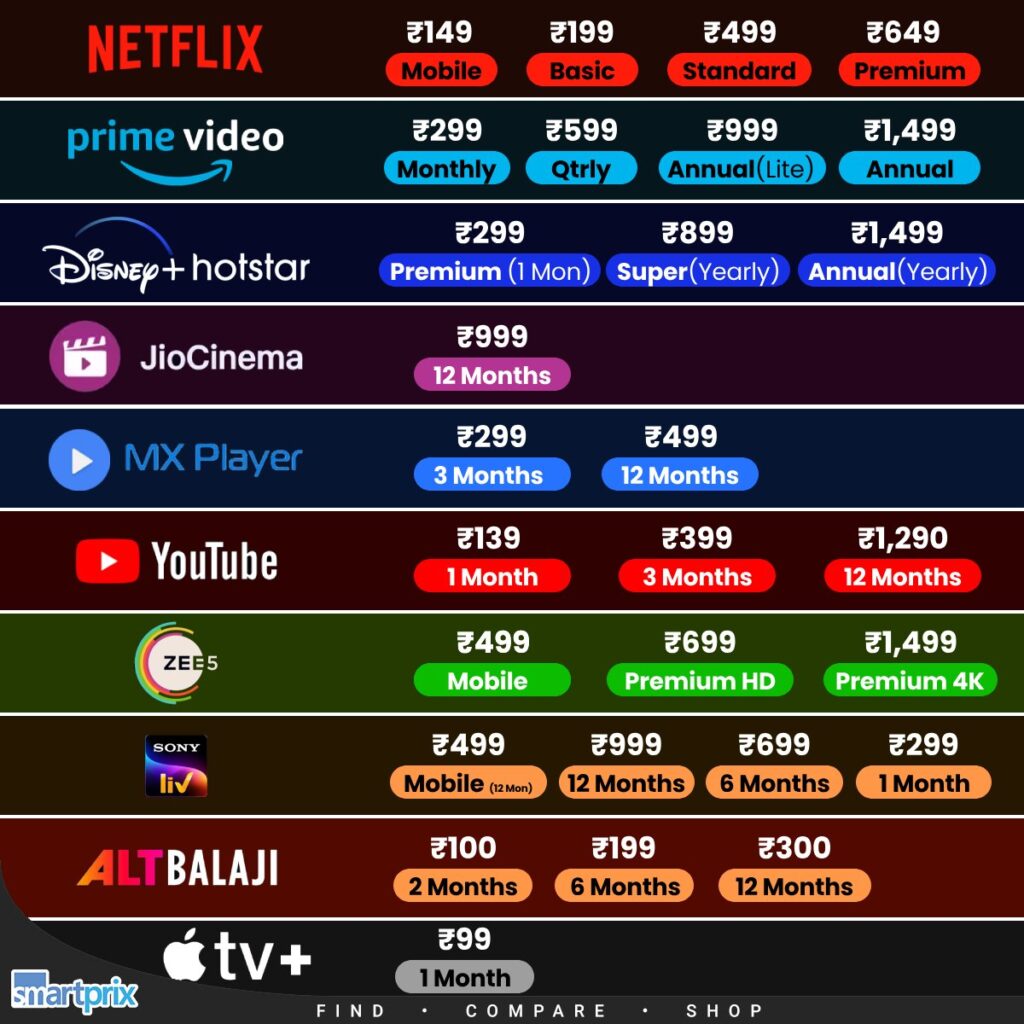
| Platform | Monthly Plans | Annual Plans | Notes |
|---|---|---|---|
| Netflix | ₹149–₹649 | — | Multiple tiers based on quality |
| Prime Video | ₹299 | ₹1499 | Includes Prime benefits |
| Hotstar | ₹299 | ₹899–₹1499 | Sports + Disney bundle |
| ZEE5 | ₹149–₹320 | ₹699–₹1949 | Regional heavy |
| SonyLIV | ₹299–₹399 | ₹999–₹1499 | Sports + originals |
Pricing alone rarely tells the full story when it comes to OTT subscriptions in India. While lower monthly costs attract first-time users, long-term retention depends on how consistently a platform delivers value.
2. Content Library Breakdown
| Platform | Movies | Web Series | Sports | Regional |
|---|---|---|---|---|
| Netflix | High | Very High | Low | Moderate |
| Prime Video | High | High | Low | Very High |
| Hotstar | High | High | Very High | High |
| ZEE5 | Moderate | Moderate | Low | Very High |
| SonyLIV | Moderate | High | High | Moderate |
Content freshness plays a major role in retention. Platforms updating regularly maintain stronger engagement.
3. App & UX Quality Score
| Platform | Speed | Recommendation | UI Design | Overall UX |
|---|---|---|---|---|
| Netflix | Excellent | Excellent | Clean | 9.5/10 |
| Prime Video | Good | Good | Cluttered | 8/10 |
| Hotstar | Good | Moderate | Balanced | 8/10 |
| ZEE5 | Average | Average | Basic | 7/10 |
| SonyLIV | Good | Good | Clean | 8.5/10 |
User experience strongly impacts retention. Even minor friction can reduce usage over time.
4. Value for Money Score
| Platform | Price | Content | Extras | Score |
|---|---|---|---|---|
| Netflix | High | Premium | None | 8/10 |
| Prime Video | Low | High | Shopping + Music | 9.5/10 |
| Hotstar | Moderate | Very High | Sports | 9/10 |
| ZEE5 | Low | Moderate | Regional | 8/10 |
| SonyLIV | Moderate | High | Sports | 8.5/10 |
Regional content is driving growth across India, especially beyond metro cities.
5. Who Should Subscribe to What
| User Type | Best Platform | Reason |
|---|---|---|
| Premium viewers | Netflix | Top-quality originals |
| Budget users | Prime Video | Best value bundle |
| Sports fans | Hotstar | Live cricket dominance |
| Regional audience | ZEE5 | Wide language support |
| Thriller lovers | SonyLIV | Strong originals |
6. Annual Plan Breakdown
| Platform | Annual Price | Monthly Equivalent |
|---|---|---|
| Prime Video | ₹1499 | ₹125 |
| Hotstar | ₹1499 | ₹125 |
| SonyLIV | ₹999 | ₹83 |
| ZEE5 | ₹699 | ₹58 |
7. Upcoming 2026 Content
| Platform | Upcoming Focus |
|---|---|
| Netflix | Big-budget originals |
| Prime Video | Regional + sequels |
| Hotstar | Sports + Disney IP |
| ZEE5 | Regional films |
| SonyLIV | Thrillers |
8. Final Verdict Ranking
| Rank | Platform | Verdict |
|---|---|---|
| 1 | Prime Video | Best overall value |
| 2 | Hotstar | Best for sports |
| 3 | Netflix | Best premium |
| 4 | SonyLIV | Best niche |
| 5 | ZEE5 | Best regional |
Conclusion
The OTT market in 2026 is about combination, not replacement. Choosing the right mix delivers the best experience based on viewing habits.